It's been a bit since my last entry, but that's on account of getting the official Demo in tip-top shape before its first public showing. Which is a roundabout way of saying the demo for Tyrants Must Fall is live for the June ‘26 Steam Next Fest! The demo covers the tutorial area as well as the first world map tier of the full game. You can try it right now!
That said, let’s dive into this week’s topic: upgrades!
At the basic level, for every battle units participate in, they gain an experience point. Once they get to three experience points, they have the opportunity to upgrade into a more advanced unit. So while a player could treat all of their units as disposable, planning to just refill the ranks with fresh volunteers, doing so would come at a cost. More advanced units show up far more rarely as volunteers, and hiring them as mercenaries is much more expensive than upgrading units you already have.
In this entry, I’m going to walk through the process of how I’m designing unit upgrade paths, and some of the interesting choices I hope it presents to the player. Specifically, I’m going to focus on one unit: the Apprentice.
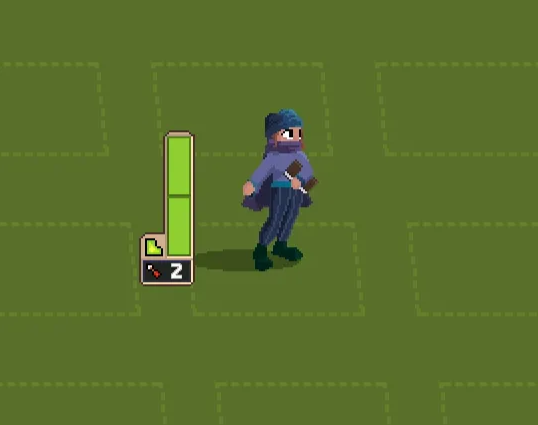
Have Book, Hurl Flame
The Apprentice is a “core” unit - by which I mean she’s a Tier 1 unit that is unlocked from the beginning of the game. While the player doesn’t start with one in Jairm’s army, they are quickly recruitable after accruing just a little glory from a few early victories.
The Apprentice is a ranged attacker, and she is stronger than the basic Hunter. In fact, with her 2-strength Ember attack, she’s the strongest of the core units. This strength has a slight downside, however, as she targets a random enemy unit in the same row as her. That means there’s no guarantee she’s going to hit the exact unit you’d like her to, which makes planning for an entire round a little more difficult.
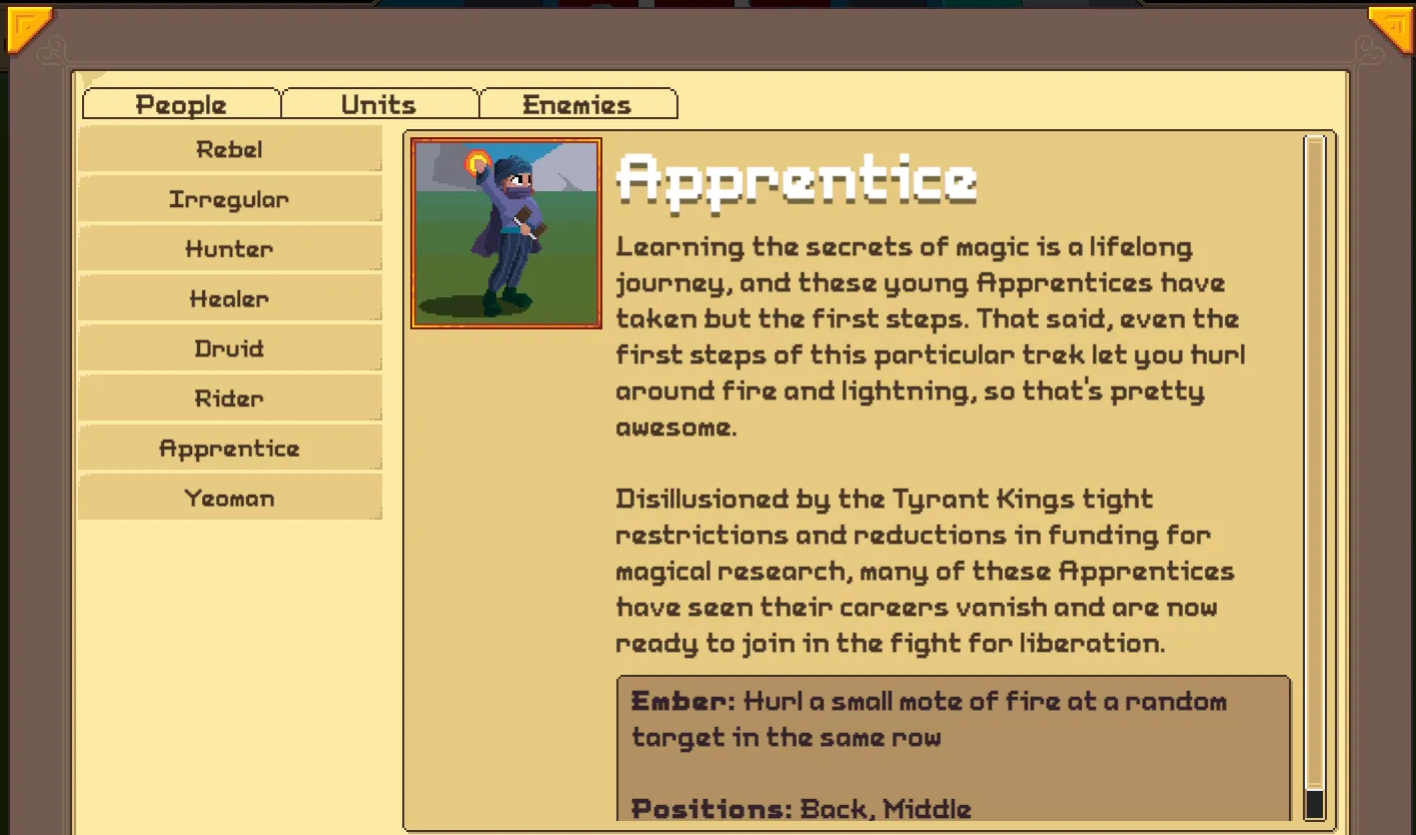
So now the question comes: where does she go from here? While it’s ok to sometimes just have a unit upgrade into a stronger version of itself with all the same pros and cons, I don’t think it’s particularly exciting if that’s the only option the player gets!
Especially with the core units, I want the player to see their first upgrade as a chance to decide what long-term path to send them down. Part of this comes from thinking of units in broad archetypes like “defender” or “glass cannon”, but more of the nuance comes from how a units strengths and weaknesses balance within itself, as well as against other units.
Not to plunge too deep into the weeds of my Very Exciting Spreadsheets, but the quick overview of how I think about units is through four factors: Strength, Durability, Utility, and Flexibility.
Strength is how hard a unit can hit other units. Pretty straightforward!
Durability is how “survivable” a unit is. This isn’t just it’s HP, but other factors like inherent Armor or special abilities that might give it more ability to take some hits or resist status effects.
Utility is what a unit can do outside damage that can make a difference in battle. This is everything from providing healing to imposing status effects to how it chooses targets.
Finally, Flexibility is how rigid (or not) a unit is in terms of placement on the battlefield. Can they only attack from limited positions? Do they have extended movement abilities? If they can only fit one place, they aren’t very flexible, but if they can slot in all over the battlefield, that’s a much higher rating.
Putting It In Practice
So the basic Rebel unit, by these metrics, has “Normal” strength. It does 1 damage with its attack, which for a Tier 1 unit is completely average. It has “Good” durability not just because of its 2 HP, but because of its Stand Together ability which can grant it an additional HP.
For Utility, it scores as a “Low” because, well, it doesn’t really do much other than attack the thing directly in front of it. By the same token, it gets “Low” flexibility because while it can be in the Front or Middle rows, it can’t attack if another unit is blocking its line towards the enemy.
(Again, all of these metrics are comparisons against units of the same tier. What’s “Good” Strength at tier 1 would be terrible compared to a Tier 4 unit)
Turning our attention back to the Apprentice, she has “Good” Strength because of that 2-power attack mentioned earlier. Her Durability is “Normal” as she has 2 HP but no other defensive capabilities. Her Utility scores a “Low” because of the random nature of her targeting. Finally, her Flexibility is “Normal” as she can attack from the Middle or Rear, and doesn’t care if any other units are blocking her.
So where does she go from here?
My goal with this particular spellcaster line is to give the player the option of moving down one branch that focuses on damage, but at the cost of utility and durability, or a more flexible line that sacrifices some power.
That said, our two options look like this:
The Kindler - A souped up version of the basic Apprentice, but with a stronger flame attack. Keeps the random targeting, but does more damage overall. Powerful but unpredictable. The maintains strong Strength and Flexibility, but continues to lack Utility.
The Evoker - A lightning-powered mage, she attacks with a line attack that hits all foes in a line in her row. Guaranteed damage, but less powerful. While there is a hit to Strength and Flexibility because of the lower damage and positional nature of the attack, Utility jumps by nature of being the first unit with a multi-target attack
I think that, in terms of options for a player, this provides an interesting choice. They can continue down the high-damage path, knowing it’s never going to be completely reliable. Or they can switch to more focused, but lower, damage, knowing they can count on the reliability.
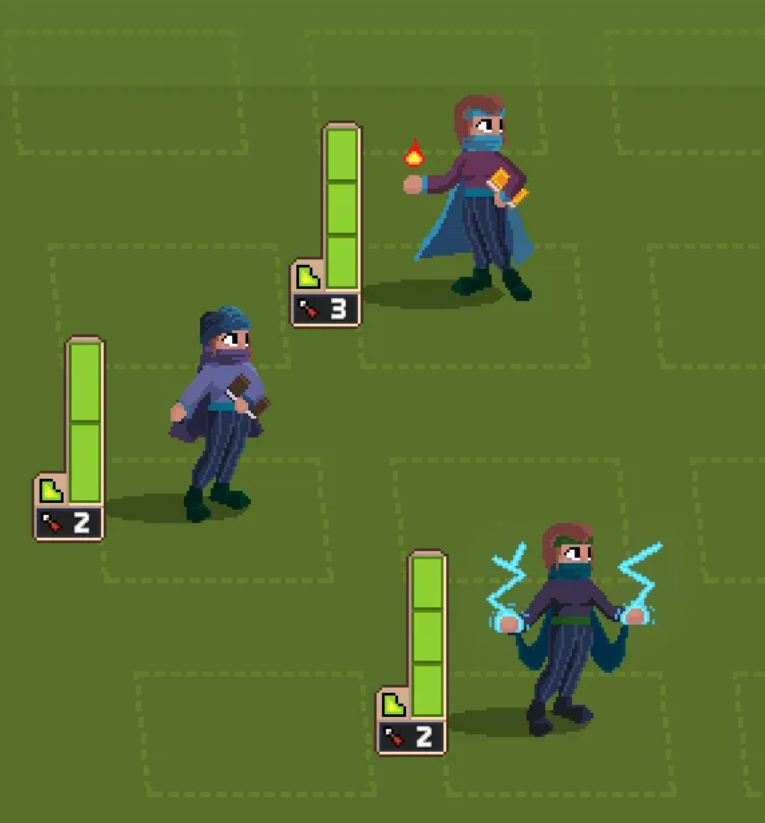
Obviously these units will have subsequent upgrades of their own, but those will be refinements down these two initial paths.
The Finishing Touches
So with the core ideas in place, the next steps are actual implementation. This is everything from the unit art to the line attack logic to creating the VFX for the attack itself!
Oh, and that’s not even including figuring out the more careful balancing of things like the exact attack strength, unit upgrade costs, and unlock tier (I told you there were spreadsheets involved)
But that aside, this is the kind of process that goes into each and every unit and their eventual upgrades. Over the course of the game, I want the player to always feel like the upgrade process is a moment to make a Cool Decision, one that helps them shape their army the way they want without feeling like a no-brainer.
Lots more units to come, and lots more opportunities for new and interesting playstyles! In the meantime, as I said, you can try the demo right now and give it a wishlist!
Next Time: Making Music Like It’s 2001.
Build your rebel army and lead them to victory over the Tyrant King in this turn-based tactical roguelike. Improve your leader's skills, unlock new units, and hone your battlefield strategy as you march towards your fate as the Hero of Destiny.