Tyrants Must Fall has been in the hands of the initial playtest pool for a few weeks now, and as always it’s fascinating and terrifying to get feedback.
Lots of bugs, as you’d expect - some easy to replicate and solve, some that turn into entire mysteries in their own right. And while finding and fixing the bugs is important, at this stage the even more valuable thing is the questions players ask about how things work.
When a player asks me a question, to me it immediately means I’ve failed at communicating some important piece of information. If they don’t know what a term means, or don’t understand why something happened the way it happened, that’s a problem I’ve created. Maybe it’s that I didn’t make the relevant information interesting enough to pay attention to, or maybe I took for granted that something was clear when it really wasn’t. Either way, if there’s a gap between what I think the player should know and what the player actually knows, that’s the space where disappointment happens.
An Efficiency of Words
A thing about me is that I like to write. And when I write, I like to use words. Lots of words. While this can be extremely fun for me, it’s not always as much fun for the people who have to do the reading. One lesson I learned extremely early on during public playtests of Station Zeta and Camp Keepalive is - for the most part - most players don’t like reading*. Even with my first draft tutorial for Tyrants, folks were telling me it was too much reading.
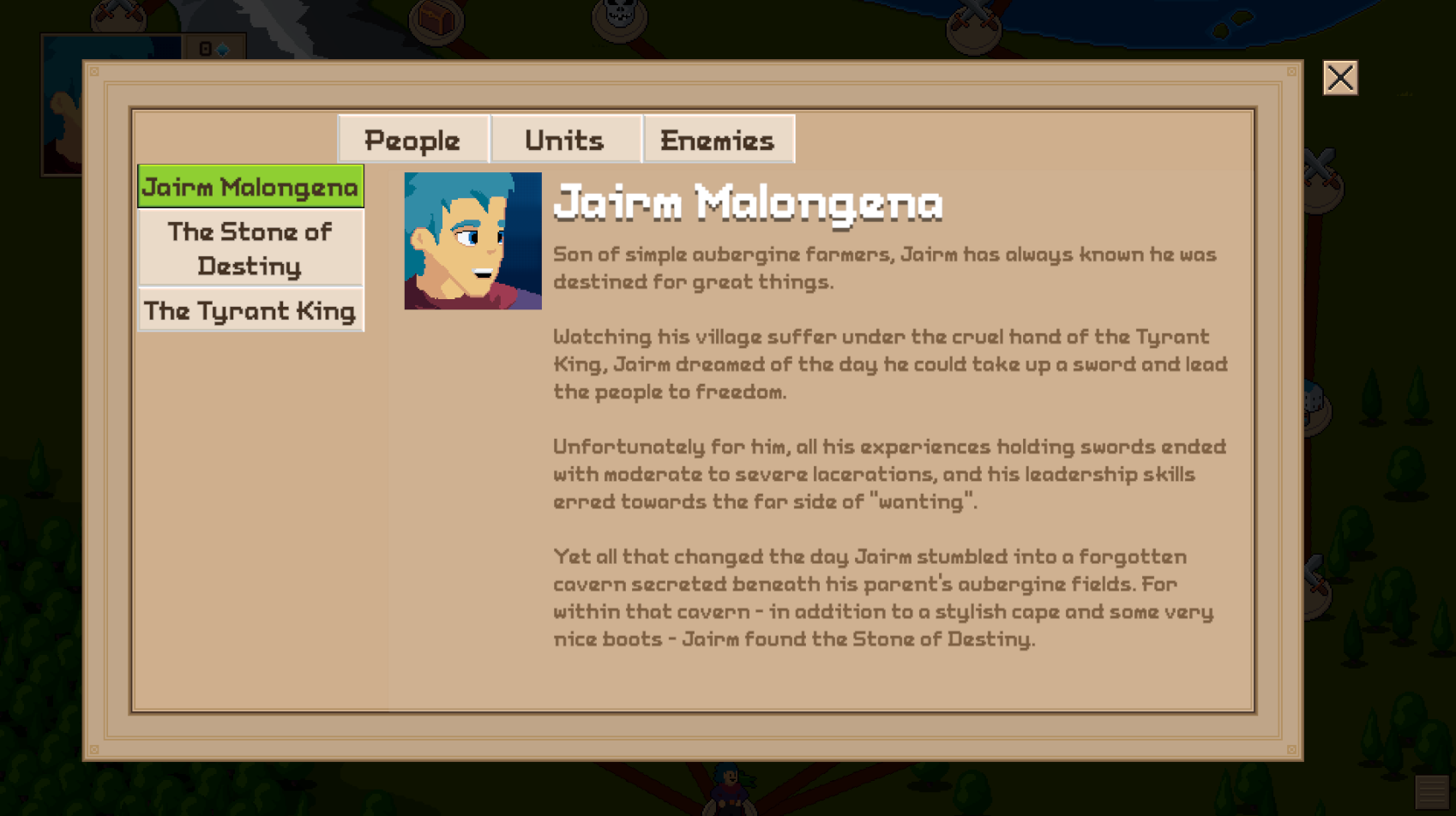
This was hard, because I had a lot of concepts about how the game worked that needed to be communicated. I also wanted to keep the game’s personality intact, so that meant keeping dialogue sharp, witty, and also fully informative.
Totally easy!
What that really meant was a lot of editing and deciding what exactly were the key pieces of information I needed to make sure to explain to the player, and what were things that were so obvious or intuitive that I could let them explain themselves.
After getting it in the hands of players, it quickly became clear I’d missed the mark on one key component: how the combat rounds play out.
Originally I had a somewhat lengthy breakdown in the tutorial, but it felt like too much. As far as I was concerned, seeing the battle play out made it pretty clear how things worked! Those were words I could spare the player.
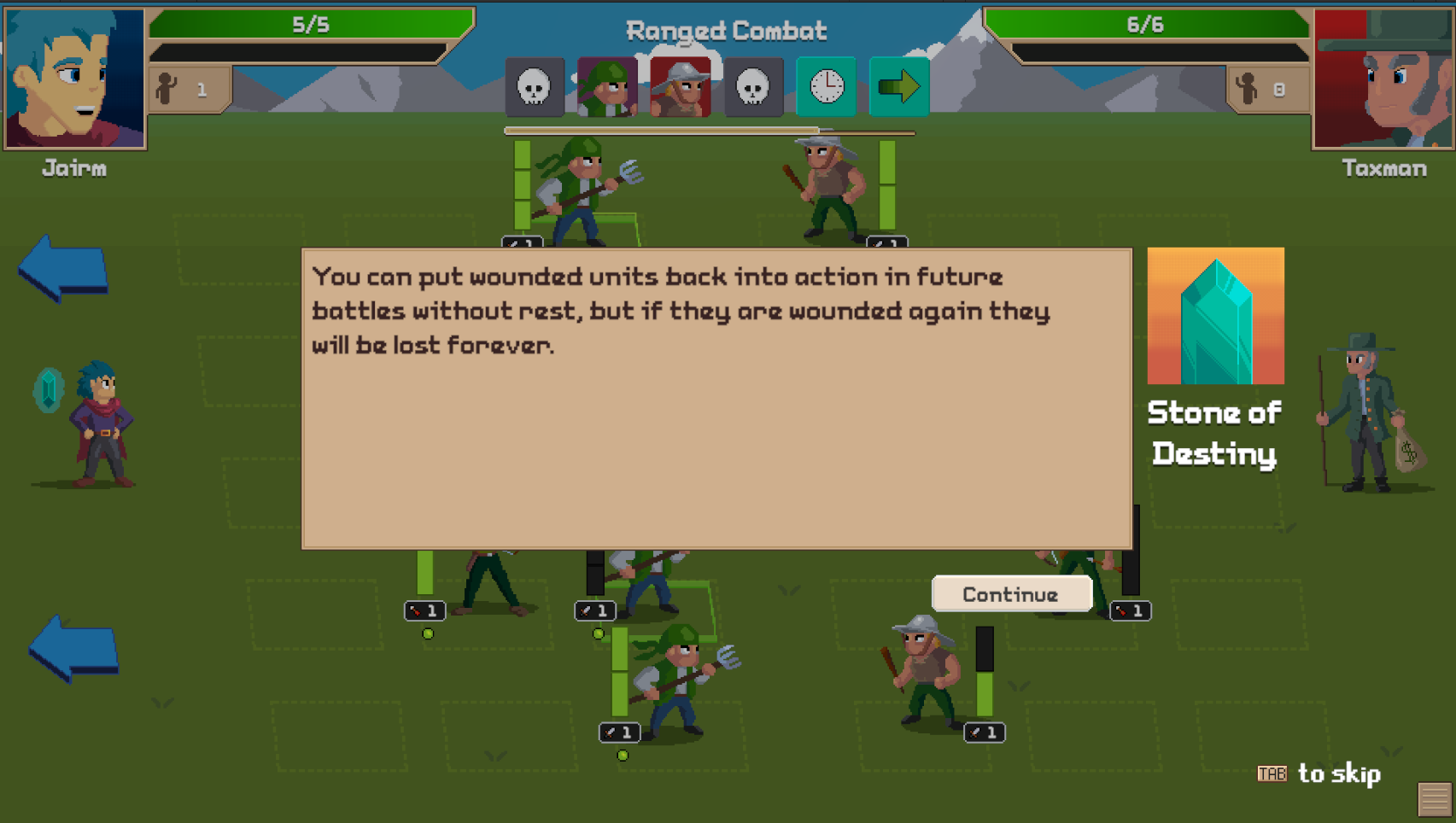
I was, obviously, incorrect.
While the immediate temptation was to put that section back into the tutorial, it seemed to me there was more that could be done here (and preferably without creating more reading). Even if I put that section back in, shortened as much as humanly possible, it was just one singular opportunity for the player to see it explained and for me to hope they both paid attention and remembered. That’s not great odds!
* a vast overgeneralization, sure, but also one aligned with expectations.
A New Bar In Town
The better answer, I decided, was to make sure there was something that was both easy to understand and persistent so the player wasn’t at risk of missing it. The thing that fit the bill perfectly was an old classic: the initiative bar.
I had initially thought an initiative bar was overkill because of the simultaneous nature of how turns played out. But that was because I was thinking about it as me - the guy designing the system - and not a player trying to learn the system.
Putting an initiative bar in place immediately clarifies several things for the player. First of all, it makes the separation of melee and ranged unit actions abundantly clear; something that wasn’t coming through with just the tutorial mention. And from that, it marks out the points at which casualties are removed and “extra” actions take effect (like battlefield hazards, status effects, etc) which also wasn’t immediately clear.
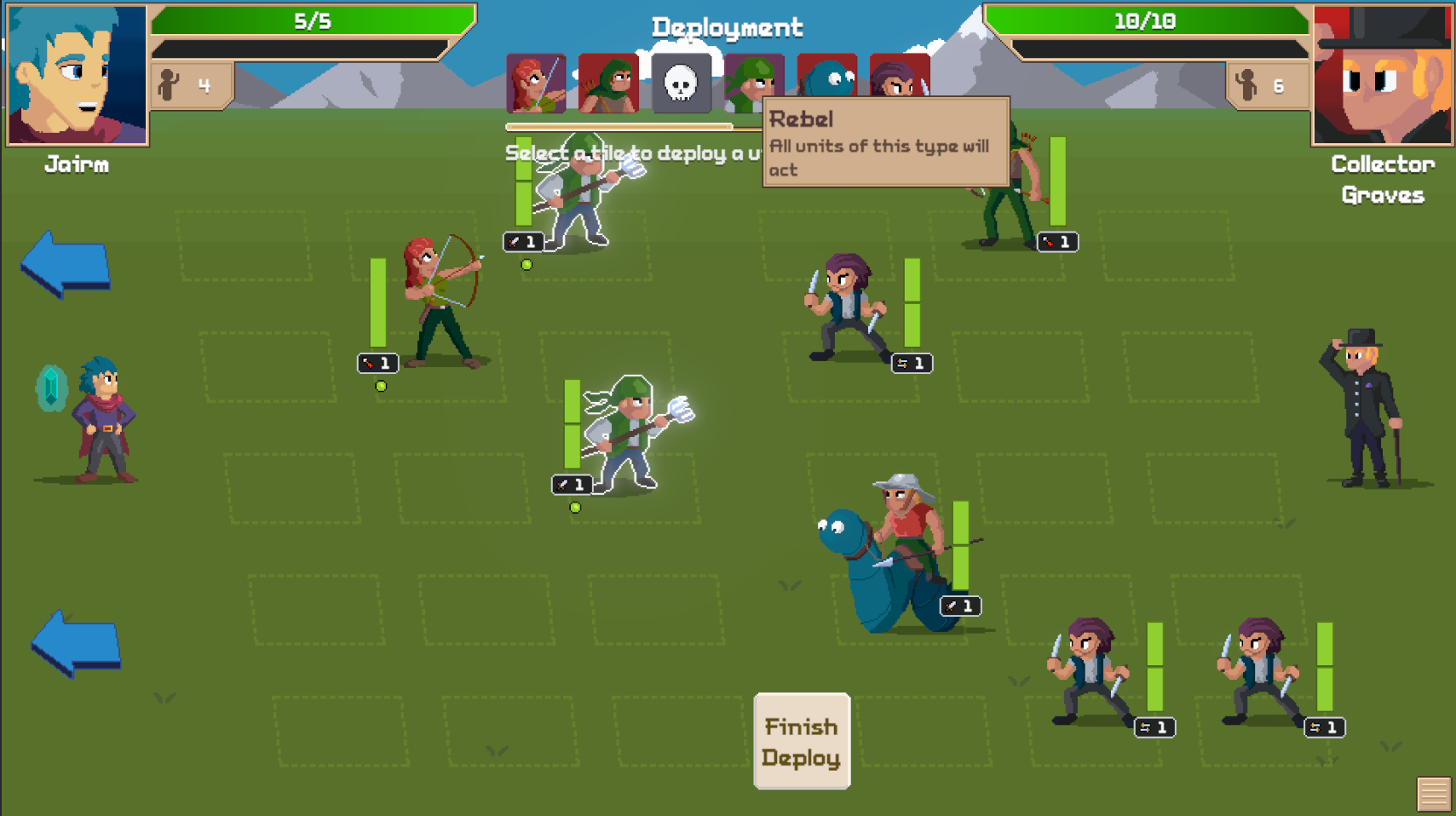
By adding it to the permanent battle UI, it becomes a constant reference point for the player if they are ever unclear about when a particular type of unit might act, or why something processed the way it did. As soon as I finished putting it in, it felt like it was meant to be there all along. It was an incredibly natural piece of the UX I’d just been overlooking.
Initial feedback from testers has been very positive on the change - they didn’t need me throwing more and more text at them, they just needed something clear to look at.
En Garde
Another issue that came up during testing was how Armor was functioning. There are very few units in the early game that use Armor, so again it was something I overlooked in the Tutorial. But beyond just explaining it at all, I realized that the way it currently functioned was not only confusing for the player, but was also going to cause me some serious issues further down the line.
In the very beginning, I had Armor functioning as a cumulative effect - the amount of armor a unit had would negate an equal amount of damage. In the name of simplification, I revised the system to where armor became a binary: a unit either had it or didn’t. If it had it, it could absorb a hit (no matter how large) and the armor would be removed. With low-level units, this wasn’t such a big deal - when units only dealt one or two damage, a single “block” made sense.
However, as units get stronger and attacks start to deal more damage, the idea of binary armor suddenly becomes much more powerful. Putting a “cheap” unit in a position to guard on their turn meant that they could, essentially, tank the strongest units in the game indefinitely unless the enemy really focused on removing them. Maybe it’s just me, but I don’t find that a particularly compelling mechanic!
Given that, I’ve switched the Armor system back to something more quantifiable - something familiar to any player who’s played something like Slay the Spire.
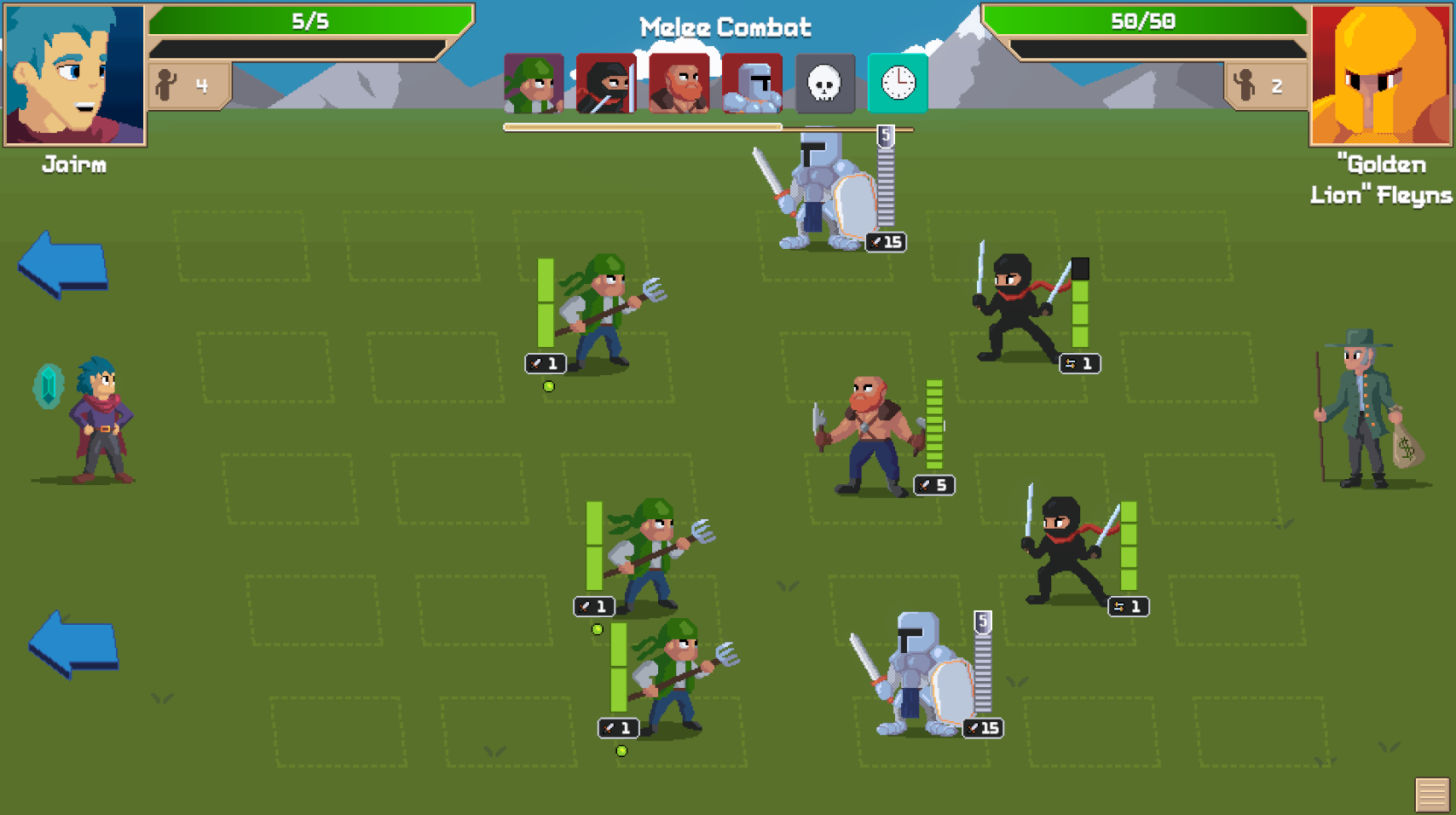
It’s something more intuitively understandable to players, and it also opens up some more interesting options for me to design unit abilities around. Now Defender units can have a wider range of ways to really hunker down, and other units can grow around a focus of piercing or negating armor. It’s more exciting for me as a designer, and I think it will be much more compelling for players to craft strategies around.
Worky Worky, Busy Bee
Honestly, that’s just a small slice of updates over the past few weeks. Work continues at a breakneck pace to get ready for Next Fest, and I’m still aiming to open up the playtest to a larger pool of people shortly.
Beyond that, tons of UI updates, balance changes, and graphics updates. Also some big changes to the metaprogression. Oh, not to mention an overhaul of all the SFX and new music tracks coming together!
It’s a whirlwind, but a good one. Stay tuned!
Next Time: Changes galore!
Camp Keepalive: Endless Summer is a turn-based strategy game set in a camp straight out of an 80's horror movie. Save the helpless and dull-witted campers from an onslaught of monsters with a team of counselors, each with their own unique abilities.
Run, jump, shoot, and think your way to safety in this retro-inspired 2D puzzle-platformer. Station Zeta is out of control, and you'll have to deal with crazed robots, terribly designed station machinery, and blatant safety hazards as you try to make your escape across 35 levels.